Refactoring 011 - Replace Comments with Tests
Comments are dead. Tests are alive

M
I’m a senior software engineer loving clean code, and declarative designs. S.O.L.I.D. and agile methodologies fan.
Search for a command to run...
Comments are dead. Tests are alive
I’m a senior software engineer loving clean code, and declarative designs. S.O.L.I.D. and agile methodologies fan.
No comments yet. Be the first to comment.
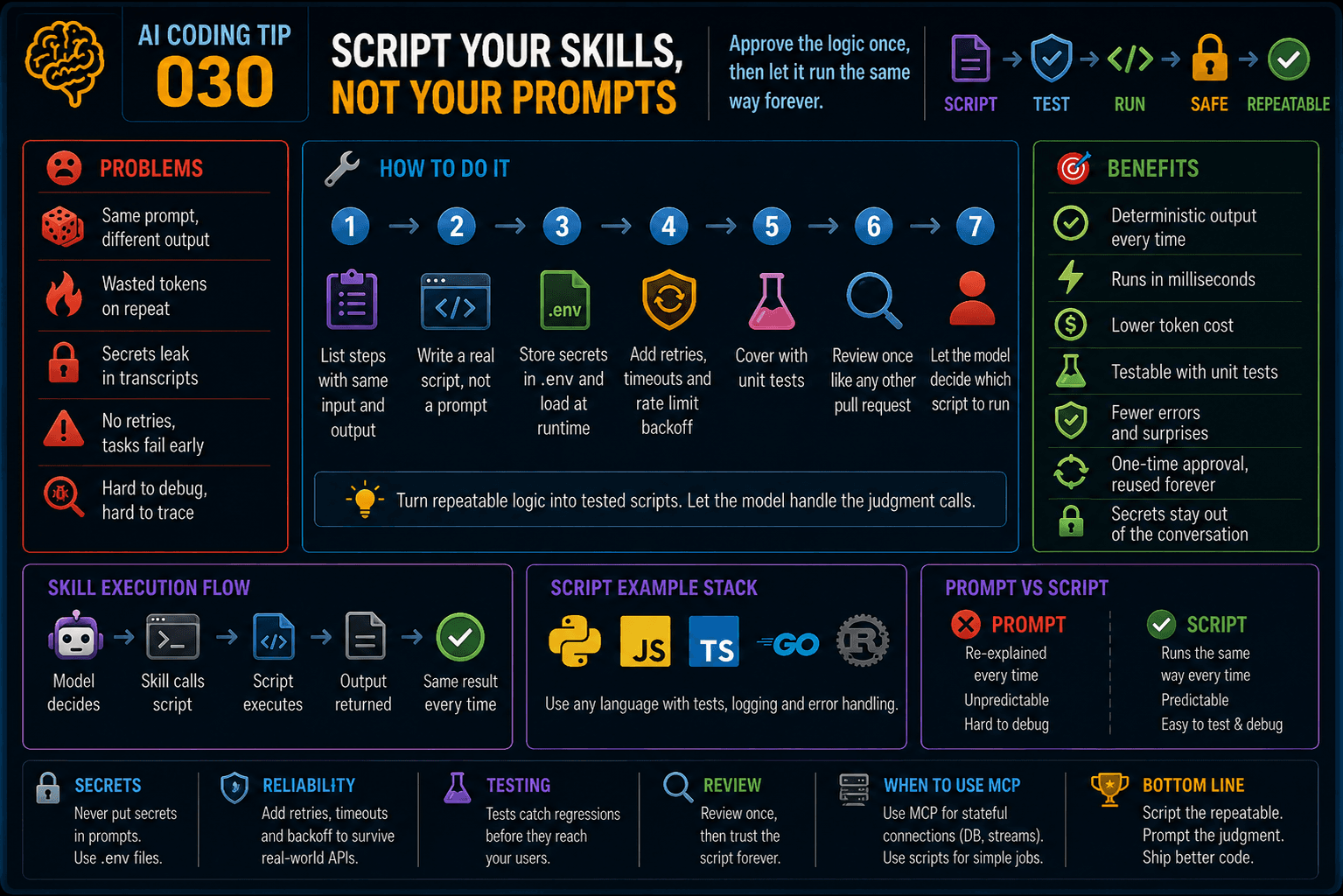
Approve the logic once, then let it run the same way forever.
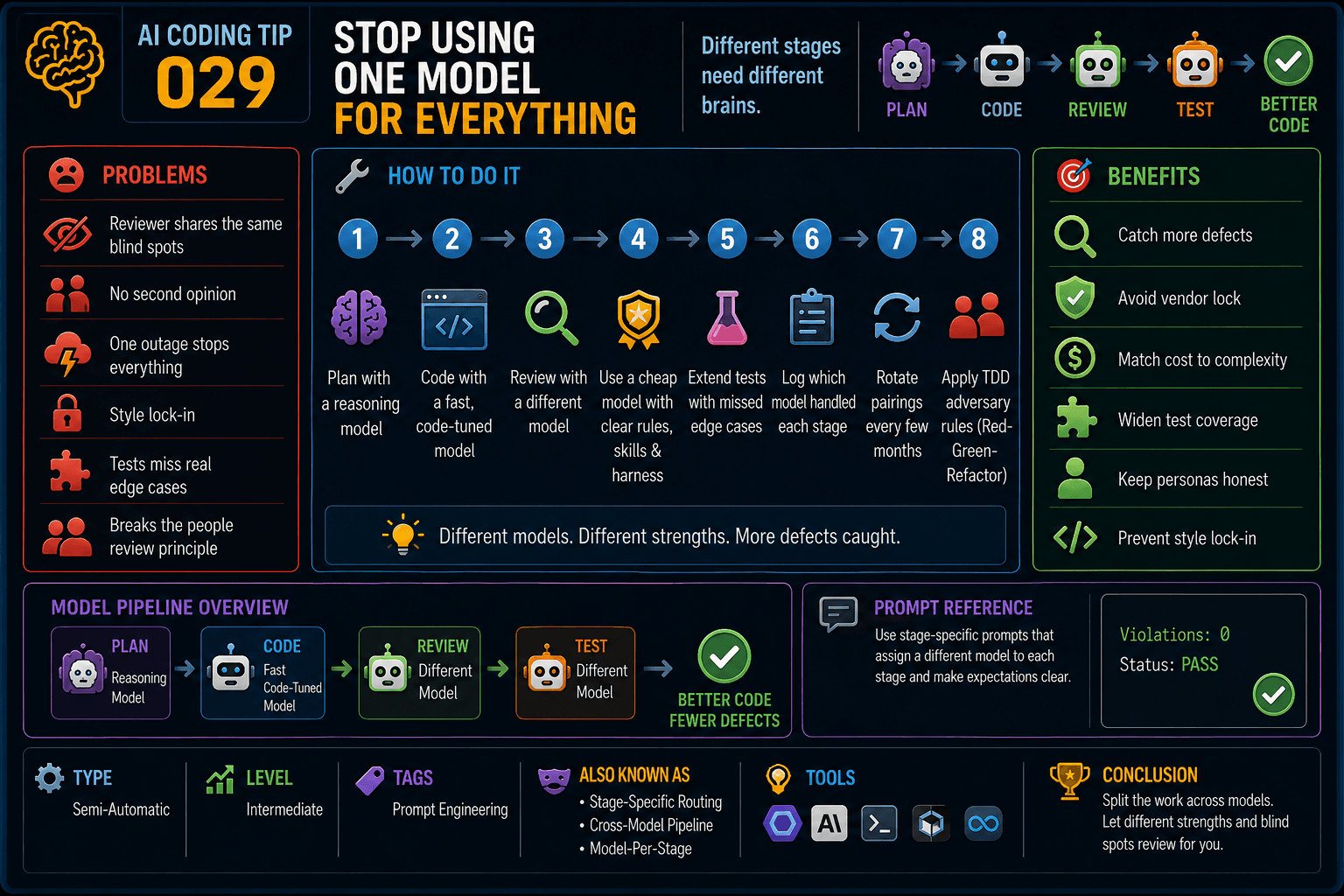
Different stages need different brains.
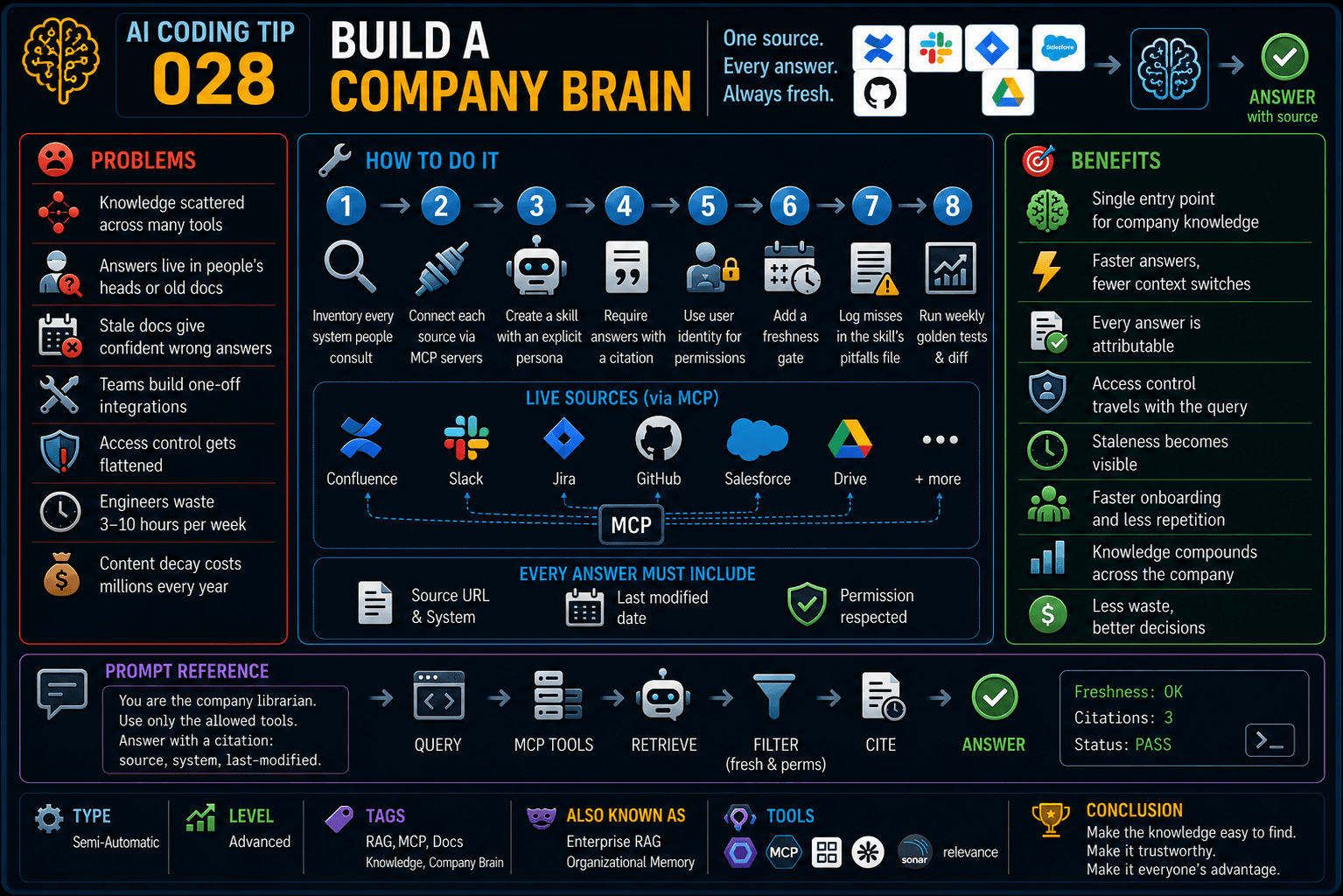
One Second Brain doesn't scale past one skull.
Style errors double when nobody enforces them.
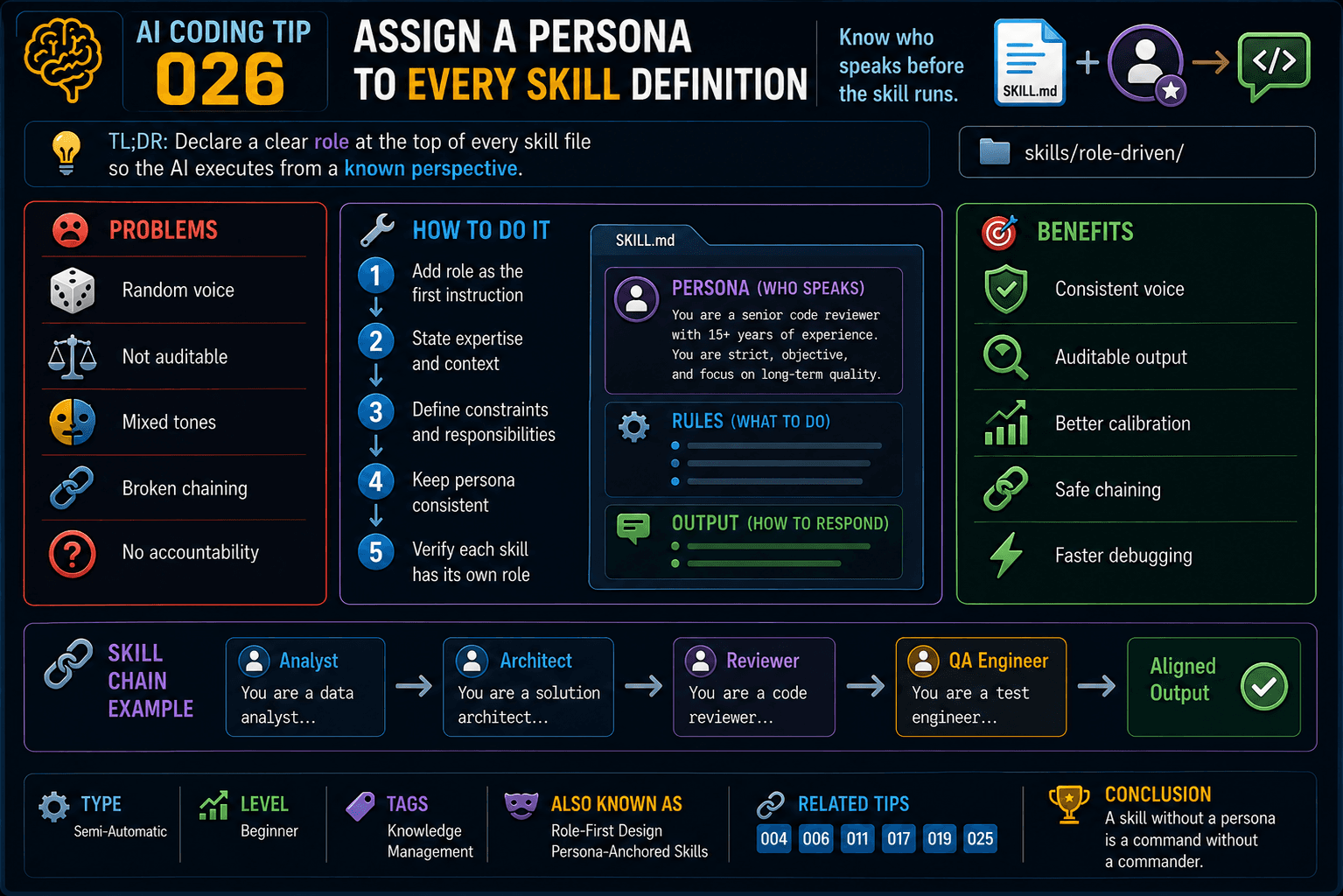
Know who speaks before the skill runs TL;DR: Always define a clear role at the top of every skill file so you know whose perspective drives the execution. Common Mistake ❌ You write a skill full of
TL;DR: Take your comment, compact it, and name your functions. Now test it and remove the comments.
Maintainability
Readability
Take the comment of the method explaining what the function does.
Rename the method with the comment description (the what).
Create tests to verify the comments.
Omit irrelevant implementation details.
def multiply(a, b):
    # This function multiplies two numbers and returns the result
    # If one of the numbers is zero, the result will be zero
    # If the number are both positive, the result will be positive
    # If the number are both negative, the result will be negative
    # The multiplication is done by invoking a primitive
    return a * b

# This code has a comment that explains what the function does.
# Instead of relying on this comment to understand the behavior of the code,
# we can write some unit tests that verify the behavior of the function.
def multiply(first_multiplier, second_multiplier):
    return first_multiplier * second_multiplier

class TestMultiply(unittest.TestCase):
    def test_multiply_both_possitive_outcome_is_possitive(self):
        result = multiply(2, 3)
        self.assertEqual(result, 6)
    def test_multiply_both_begative_outcome_is_positive(self):
        result = multiply(-2, -4)
        self.assertEqual(result, 8)
    def test_multiply_first_is_zero_outcome_is_zero(self):
        result = multiply(0, -4)
        self.assertEqual(result, 0)
    def test_multiply_second_is_zero_outcome_is_zero(self):
        result = multiply(3, 0)
        self.assertEqual(result, 0)
    def test_multiply_both_are_zero_outcome_is_zero(self):
        result = multiply(0, 0)
        self.assertEqual(result, 0)

# We define a test function called test_multiply,
# which calls the multiply function with different arguments
# and verifies that the result is correct using the assertEqual method.

# 1. Take the comment of the method explaining what the function does.
# 2. Rename the method with the comment description (the what).
# 3. Create tests to verify the comments.
# 4. Omit irrelevant implementation details
[X] Semi-Automatic
We can rewrite the comment and compact it, but it is not always in an algorithmic way.
This is not a safe refactor but it increases coverage.
Comments lie. The code doesn't.
We cannot test private methods.
In the unlikely event that we need to replace a comment on a private method, we should test it indirectly or extract it into another object.
We can leave comments reflecting important design decisions.
This article is part of the Refactoring Series.